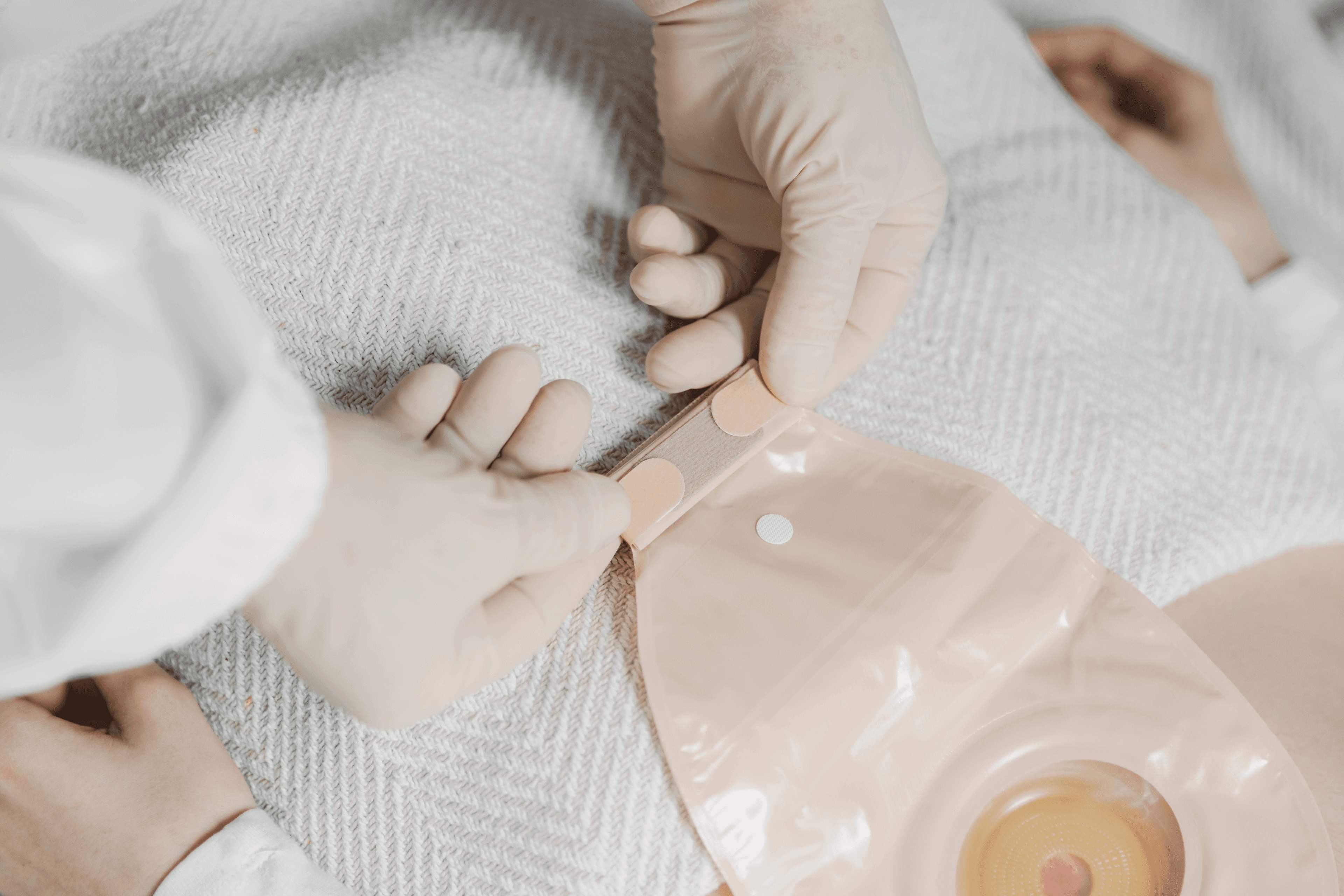
Noticing that your stoma has changed shape or become longer than usual can be worrying. In most cases, this is a prolapsed stoma; a common and usually harmless complication that your stoma care team can help you manage. Here's what causes it, what to watch for, and when to seek help.
What is a prolapsed stoma?
A prolapsed stoma happens when a section of your intestine pushes outward through the stoma opening, which makes the stoma appear longer than it originally was. It can occur with either a colostomy or an ileostomy, and the amount of intestine involved can range from around 2 centimetres to as much as 10 centimetres or more.
Although it can look alarming, a prolapsed stoma is not usually a serious medical problem on its own.
What causes a stoma to prolapse?
A prolapse is generally caused by increased pressure on the abdomen. This can happen for several reasons: persistent constipation, frequent heavy coughing, sneezing, or straining, weight gain following surgery, or weakened abdominal muscles. Any of these can put extra strain on the area around the stoma, which makes prolapse more likely.
How do you know if your stoma is prolapsed?
The clearest sign is visual: you'll see your stoma become noticeably longer, with a section of intestine protruding through the opening. The area may also feel sore or irritated, and you might find it harder to get a secure seal with your ostomy bag, since a longer stoma changes the shape your pouching system needs to fit around.
Is a prolapsed stoma dangerous?
In most cases, no. A prolapsed stoma on its own tends to be more disruptive than dangerous — it can affect bag fit and comfort, but it doesn't usually threaten your health.
Very rarely, complications can develop, such as the bowel becoming blocked, the protruding intestine becoming trapped (incarceration), or its blood supply being cut off (strangulation). These are uncommon, but they're the reason it's worth letting your care team know about a prolapse instead of managing it entirely on your own.
Can you push a prolapsed stoma back in? Can it fix itself?
Sometimes, yes — the protruding intestine can settle back into place on its own, and lying down to relax your abdominal muscles may help this happen naturally.
Your stoma care team may also be able to show you techniques to gently ease the intestine back into position. This isn't something to attempt based on general instructions alone, though — it's best learned directly from a nurse or clinician who can guide you through it safely for your specific situation.
Can a prolapsed stoma be reversed?
Yes, in the sense that treatment can usually resolve it. If a prolapse doesn't cause complications, your care provider may simply help reposition the intestine, sometimes using non-surgical methods. If complications do arise, surgical options are available — this might mean revising the existing stoma, replacing the affected section of intestine, or, in some cases, creating a new stoma elsewhere on the abdomen.
It's worth knowing that a prolapse can recur even after successful treatment, so ongoing monitoring matters.
When should you contact your care team regarding a stoma prolapse?
Get in touch with your stoma care team if you notice changes in how your stoma functions — for example, if the stoma's edge lifts away from your skin, if your ostomy bag won't stay sealed, or if the stoma fills the bag unusually quickly.
When is it a medical emergency?
Rarely, a prolapse can lead to a blocked bowel. Seek emergency care straightaway if you experience sharp or severe abdominal pain, bleeding from the stoma, a change in stoma colour such as turning purple or black, loss of appetite, or nausea and vomiting.
The bottom line: Stoma prolapse
A prolapsed stoma can be an unsettling surprise, but it's a well-understood complication that your stoma care team deals with regularly. In the vast majority of cases, it's manageable and not a sign of anything serious — and support is always available if you're unsure what you're seeing or feeling.
FAQ: Prolapsed stoma
Is a prolapsed stoma dangerous?
Usually not. A prolapse is more often uncomfortable or disruptive to bag fit than medically serious. Rare complications like bowel obstruction or reduced blood supply to the intestine can occur, which is why it's worth reporting any prolapse to your stoma care team.
Can a prolapsed stoma fix itself?
It can. The protruding intestine sometimes moves back into place on its own, and relaxing your abdominal muscles by lying down may help. Even so, it's a good idea to let your care team know it happened.
Can you push a prolapsed stoma back in?
In some cases, yes, but this is best done with guidance from your stoma care team rather than attempted alone the first time. They can show you techniques suited to your specific situation.
How do you know if your stoma is prolapsed?
The main sign is your stoma becoming visibly longer, with intestine protruding through the opening. You may also notice soreness, irritation, or difficulty keeping your ostomy bag sealed.
Can a prolapsed stoma be reversed?
Yes. Depending on severity, treatment can range from simple repositioning to surgical revision of the stoma. Prolapse can sometimes return afterwards, so continued monitoring is part of long-term care.
Stoma leaks are one of the most common concerns for ostomates, and one of the most frustrating too. There’s no need to worry, though, as stoma leakage problems have a cause, and most causes have a solution. In this guide, we'll cover why leaks happen, how to prevent them, and where to turn when you need support.
A stoma can bring a sense of routine and stability to everyday life. At times, however, changes can occur — one of these is a stoma blockage, also known as an intestinal obstruction.
A stoma operation brings change — both physically and emotionally. As you begin to adjust, one area that plays an important role in how you feel each day is the skin around your stoma.