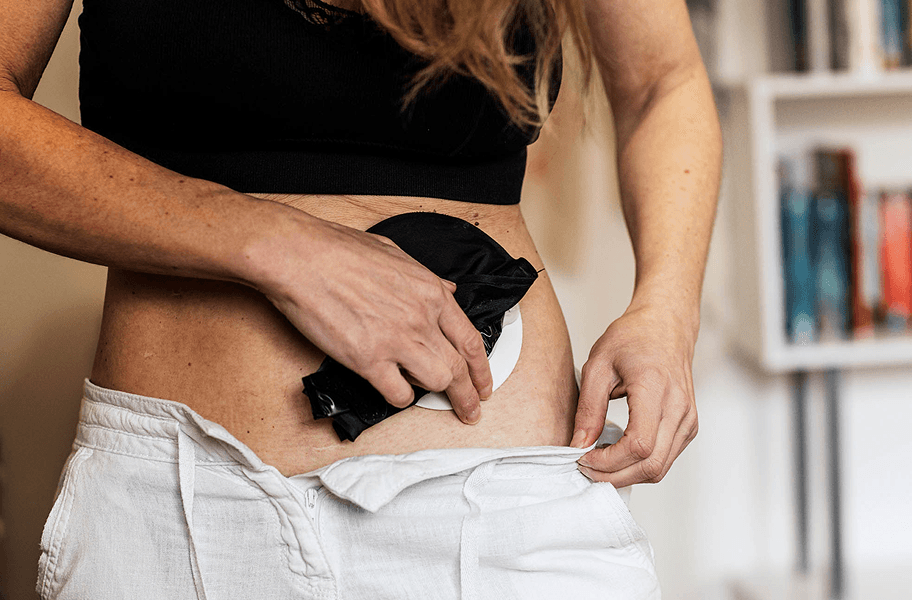
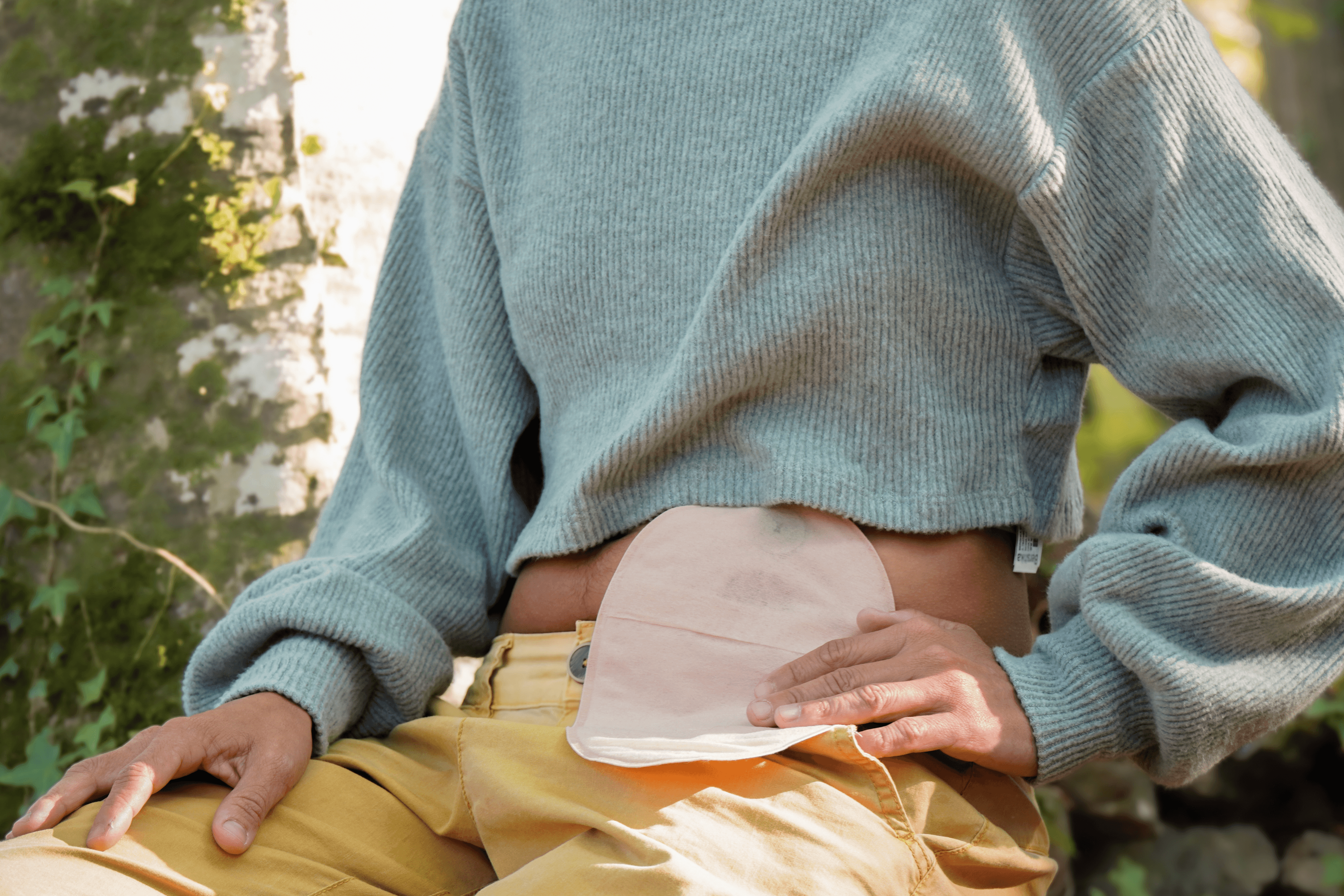
Red, sore or itchy skin around your stoma is common, and it can be frustrating and uncomfortable. In this guide, our stoma care nurses explain what can cause sensitive skin around a stoma, what to check first, which stoma bags may help and how to soothe irritated skin.
What causes sensitive skin around a stoma?
Red, sore and irritated skin around your stoma (also called peristomal skin) can come from several sources.
Contact with stool or urine
This is the most common cause. Output coming into direct contact with the skin can irritate it:
Colostomy: Stool can cause soreness to healthy skin.
Ileostomy: Stool can be quite corrosive and can damage the skin in a short period of time.
Urostomy: Urine is both liquid and acidic. It can seep into the flange before it leaks, and both can cause itching and redness very quickly.
Many people feel a prickly, itchy sensation on the skin around the stoma before the skin becomes damaged. If the skin irritation isn’t resolved, the skin can bleed, which can be alarming.
A reaction to a product
Sensitivity and irritation can also be a sign of a reaction to one or more of the products you use. You may be sensitive to an ingredient, or even allergic to a product.
A yeast infection
Sore, irritated skin can also be caused by a yeast infection. Yeast loves a dark, warm and moist place, so the skin underneath a stoma flange offers perfect conditions.
How to tell the causes apart
This table is a general guide only. Your stoma care nurse can assess your skin and tell you what is going on.
Possible cause
What it may look and feel like
Contact with stool or urine
Redness and soreness, often with a prickly itch before the skin becomes damaged.
Allergy to a product
A clearly defined border of inflammation that mimics the edges of the product. You may also notice blistering.
Yeast infection
Bright red skin with irregular borders, smaller pink dots away from the main area, moist white spots, and very strong itching.
Symptoms of sensitive skin
Eczema
Hives
Patches of redness
Rashes that may itch, sting or burn
Itching, stinging or burning without a visible rash
What can I do if my skin is sensitive?
Check the fit of your baseplate
If the skin is exposed to stool or urine, first check the size of the opening (aperture) in the flange or baseplate. If a lot of skin around the stoma is exposed, the flange needs to be re-sized so it fits correctly.
Also check for folds, creases or dips in the skin around the stoma, where output can seep through and reach your skin. You may even need a convexity product to prevent leaks and skin exposure. Your stoma care nurse can assess your skin, help you choose a more suitable bag and introduce convexity if needed.
Protect your skin with accessories
Stoma accessories such as slims or seals protect the skin directly around your stoma, underneath your bag. Skin barrier creams and powders can also be lightly sprinkled onto sore skin and are compatible with a stoma bag. Stoma pastes can be used as a barrier too, and some also help to soothe sore skin.
Be careful not to use a stoma paste that contains alcohol if your skin is already sore, as it can make things worse.
Remove your bag gently
Use a good adhesive remover spray when you take your bag off. This helps to avoid “skin stripping”, which happens when the bag is pulled off the skin and causes irritation and soreness.
Find out if a product is causing a reaction
Stopping each product in turn and monitoring the result can help you identify which one is causing the problem. In some cases, your stoma care nurse may suggest a tape impregnated with a steroid treatment, applied directly to the skin beneath the flange to calm the inflammation.
If the allergy persists and causes an obvious reaction, you may be referred to a dermatology outpatient clinic for patch testing, which identifies the ingredients you react to. Your stoma care nurse can then help you identify which stoma products are safe to use.
Treat a yeast infection
Once a fungal infection has been identified by your stoma care nurse or GP, it can be treated easily with anti-fungal treatments beneath the flange for a couple of weeks.
Which stoma bag for sensitive peristomal skin?
There are many different stoma bags, so it’s hard to know which will help if your skin is sensitive. Most flanges are made of primo hydrocolloid ingredients, which are usually skin-friendly. If you think this is causing the problem, it may be worth trying a bag made from very different ingredients.
Alginate stoma bags
Alginate is a natural ingredient derived from seaweed, known for its moisture-absorbing and soothing properties. Baseplates containing alginate may absorb and lock away moisture for a dry and comfortable wear. It is also extremely gentle for people with allergies.
Our Unora Alginate baseplate is infused with 15% alginate and may help to promote skin health around the stoma.
“As a stoma care nurse, the one stoma bag I tend to reach for time and time again is the alginate-based bag. I find the patient feels immediate relief from skin irritation and I’ve had some amazing results healing sore and irritated skin. The alginate bag can also be used on sensitive and vulnerable skin, perfect for those starting treatments such as chemotherapy. Although the flange feels thicker, I explain to my patients that this is so it can be highly absorbent, taking the effluent away from their skin.”
Thin, flexible baseplates (Microskin)
Bags with a thinner flange, such as microskin, are more breathable and moisture-vapour permeable, which is better for the skin. Thanks to the thin and flexible design, the flange moulds easily to creases and folds in the skin.
“Perfect for those who find the standard stoma bag lifts or doesn’t adhere well to areas which have dips or bulges around the peristomal area, the microskin baseplate usually gains a really good seal due to its flexibility. The bonus is the skin can breathe, which really helps sensitive skin. Patients love it as it is SO discreet!”
Bags with aloe vera or manuka honey
Other bags contain aloe vera or manuka honey, which are both soothing for sensitive and sore skin.
“Involving my patients in the decision-making stage of product choice is so important, especially when their skin is sensitive or sore. Discussing the options available, such as trialling a flange infused with aloe vera or manuka honey to soothe sore skin, can really help empower my patient.”
Tips to soothe sensitive and irritated skin
Take shorter showers and baths of less than 10 minutes, as hot water can dry the skin and cause additional irritation and itching.
Avoid baby wipes. They contain oils and fragrance, and they stop your stoma bag from sticking properly.
Pat the skin dry gently after washing, rather than rubbing it.
Always patch test a new product for 24 hours before using it on a larger area such as around your stoma. You can do this by applying the product to the inner side of your arm for 24 hours and watching for any reaction.
When to talk to your stoma care nurse
Reach out to your stoma care nurse if the skin around your stoma is red, broken, sore or tender, if it bleeds, if you have trouble applying or removing your bag, or if irritation doesn’t settle. They will be happy to assess your skin and help you find a solution.
FAQ: Sensitive skin around a stoma
Why is the skin around my stoma sore and red?
The most common cause is stool or urine coming into direct contact with the skin. Other causes include a poorly fitting baseplate, a reaction to a product and a yeast infection. Your stoma care nurse can help you find out which one it is.
Can a stoma bag cause an allergic reaction?
Yes, it’s possible. With an allergy, the inflammation often has a clearly defined border that mimics the edges of the product, and you may see blistering. Stopping each product in turn can help to identify the cause. Talk to your stoma care nurse, who may refer you for patch testing.
What is the best stoma bag for sensitive skin?
It depends on you and your skin. Most flanges are hydrocolloid-based and usually skin-friendly. If you think this is causing problems, you could try a different material, such as an alginate bag, a thin and flexible baseplate or a bag with aloe vera or manuka honey. Your stoma care nurse can help you choose.
How do I know if I have a yeast infection under my flange?
A yeast infection often starts as bright red skin with irregular borders and smaller pink dots away from the main area. There may be moist white spots, and it is usually very itchy. Once your stoma care nurse or GP has identified it, it can be treated with anti-fungal treatments.
How can I avoid skin stripping?
Use a good adhesive remover spray and take your bag off gently. Skin stripping happens when the bag is pulled off the skin, which then causes irritation and soreness.
Can I use baby wipes around my stoma?
It’s best to avoid them. Baby wipes contain oils and fragrance, which can irritate the skin and stop your stoma bag from sticking.
Find the right bag for your skin
Sensitive skin around your stoma can be frustrating, but there are many ways to calm it down. Talk to your stoma care nurse, check the fit of your bag and find the products that work for you. If you’d like to try a gentle option, explore our Unora Alginate baseplate or request a free sample.
Stoma nurse insights: Myths and realities about common ostomy concerns
Myths about living with a stoma still cause unnecessary stigma and anxiety; even though modern stoma care allows people to live full, active lives. Sally Wright sees these misconceptions often, and here she sets the record straight.
Choosing your first stoma appliance can feel overwhelming, especially with so many pouching systems, sizes, and accessories to consider. There's no single "perfect" bag — the right one depends on your stoma, body, and lifestyle, and finding it often takes some trial and adjustment. This guide covers the basics to help you feel more prepared.
High output can be a worrying and disruptive part of life with a stoma but understanding what's happening and knowing when to act can make it much easier to manage. In this guide, you'll learn what counts as high output and how it's measured, the common causes after stoma surgery, and the signs of dehydration and electrolyte imbalance to watch for.