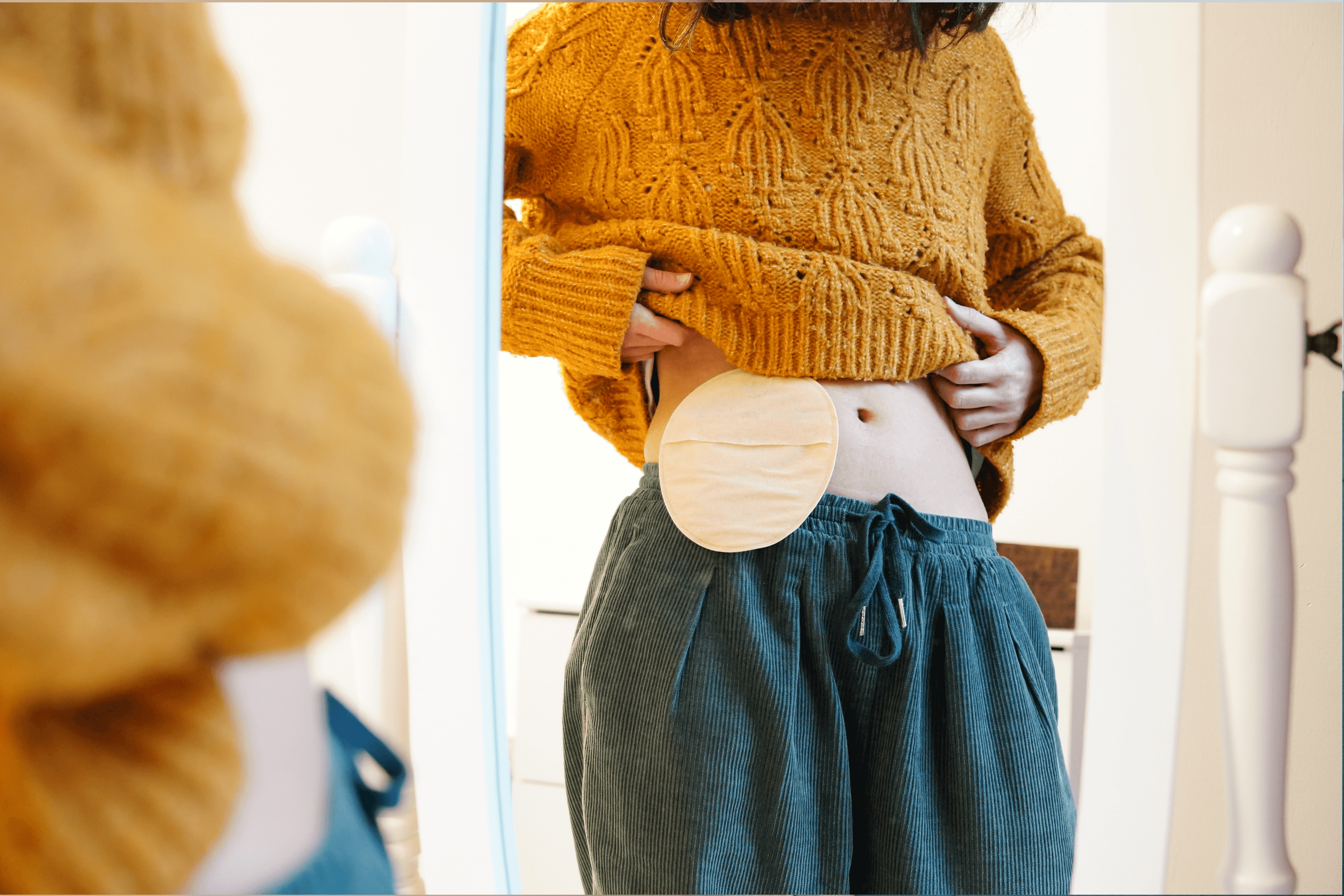
Stoma bag leaking in public: How to prevent and handle it
A leaking stoma bag can happen to anyone but knowing how to prepare for it and respond calmly can make all the difference. In this guide, we'll cover how to prevent leaks, what to do if one happens in public, and answer the most common questions about stoma bag leakage.
Common causes of stoma leakages
Before we get directly into the details, let us first have a look at the causes of stoma leakages. Now, several factors can contribute to a stoma bag leaking, including:
The stoma has changed size or shape since it was last measured
Misalignment when applying the appliance, so it doesn't fit properly
Irritated skin, which can weaken adhesion
Aggressive or high-volume output that breaks down the adhesive faster than expected
Not using a barrier spray or barrier pad
Not using a gelling product, which helps solidify output and makes it easier to manage and empty
Understanding which of these applies to your situation is often the first step toward preventing future leaks.
Prepare yourself beforehand
By preparing for the worst-case scenario, you'll be able to handle the situation with far less stress. Keeping a small emergency kit with you whenever you're out and about means you're never caught off guard.
Top tip: Pre-cutting your base plates at home will save you time if you need to change your ostomy appliance in a rush, especially if you're feeling panicked or upset.
Your ostomy bag is leaking in public? Here's what to do
Stay calm and find a suitable space
If a leak happens while you're out, the first step is to find a public restroom or an establishment such as a café or restaurant that has one. Staying calm, even briefly, will help you think more clearly about the steps ahead.
Tips for managing small bathroom stalls:
Space can be tight in a standard stall, so think creatively — the back of the toilet or the toilet paper dispenser can double as a shelf for your supplies.
Accessible restrooms are often a better option when available, as they tend to have more space, a sink, and a surface to lay out your supplies while you change your appliance.
Take your time
A leak is an unsettling experience, and it's natural to want it over with as quickly as possible. Still, try to resist the urge to rush. Taking the time to apply your new bag correctly reduces the risk of a second leak straight after the first.
Seek advice for repeated leaks
If you're experiencing leaks on a regular basis, it's worth reviewing your appliance, accessories, and application routine with your stoma care specialist or healthcare provider. Recurring leaks are usually a sign that something in your routine or product fit needs adjusting, rather than something to simply manage around.
FAQ: Stoma bag leaks in public
What should I do if my stoma bag is leaking?
Stay as calm as you can and find a restroom as soon as possible — ideally one with more space, such as an accessible restroom or one in a café or restaurant. Use your emergency kit to remove the leaking appliance, clean and dry the skin around your stoma thoroughly, and apply a fresh bag. Take your time during the change, even if you feel rushed, since applying the new appliance carefully helps prevent a repeat leak.
How often do stoma bags leak?
This varies from person to person and depends on factors like output consistency, skin condition, appliance fit, and wear time. Occasional leaks can happen even with a well-fitted routine, but frequent or repeated leaking usually points to an underlying issue — such as a stoma that has changed shape, poor alignment, or skin irritation — and is worth discussing with a stoma care specialist.
How do you empty an ostomy bag in public?
Find a restroom, ideally one with a sink nearby for washing your hands afterward. Sit on the toilet as usual, open the tail of the pouch over the bowl, and empty the contents. Wipe the inside of the tail with toilet paper or a wipe before resealing it. Carrying dry wipes and a disposable bag in your kit makes this process quicker and more discreet.
Why is my stoma bag leaking at night?
Nighttime leaks are often linked to output pooling against the adhesive seal while lying down, which can put more pressure on one area of the barrier than during the day. Using a night drainage bag, choosing a pouch designed for higher output, or applying a barrier product before bed can help reduce this. If night leaks are frequent, it's worth reviewing your evening routine and appliance choice with your healthcare provider.
Odour from a stoma bag: Causes, control and on-the-go tips
Odour is one of the most common worries people raise after stoma surgery — and it's also one of the most manageable. In this guide, we cover why stoma odour happens, practical ways to control it day to day, and how to stay confident with odour from a stoma bag when you're out and about.
Camping might feel like a daunting prospect with a stoma, but it shouldn't be. With the right preparation, it's every bit as accessible (and rewarding) as it is for anyone else. In this guide, we share our essential tips for camping with a stoma, so you can head outdoors with confidence.
Travelling with a stoma: A guide to holidays, flying and more
A holiday should feel like a chance to switch off, not a source of stress: and having a stoma certainly doesn't change that. With just a bit of preparation, you can travel with real confidence and focus on what’s really important: enjoying yourself. In this guide, we'll cover everything from packing and flying to swimming, food abroad, and the documents worth taking with you.